The defence The Prestige Tourist
“Sincerity is not manipulation.”
The film risks embarrassment to make emotion communal, and that openness is harder than fashionable detachment.


Goodbye Again
Drama · Romance · 1961
Middle-aged businesswoman Paula Tessier rejects the advances of her client's amusing 25-year-old son, Philip Van der Besh, but reconsiders when her longtime philandering partner begins yet another casual affair with a younger woman. She soon learns that May-December romances with older women are frowned upon in society.
“This is how love is...and always will be...”
Critical arithmetic
Scores change. Arguments endure.
TMDB
7.1 / 10
Community rating
Middle-aged businesswoman Paula Tessier rejects the advances of her client's amusing 25-year-old son, Philip Van der Besh, but reconsiders when her longtime philandering partner begins yet another casual affair with a younger woman. She soon learns that May-December romances with older women are frowned upon in society.
Not a recommendation score. A measure of how closely the film’s taste signals resemble yours.
The archetype split
The Prestige Tourist
“You like your greatness pre-approved.”
Read their caseThe Adrenaline Seeker
“If it slows down, you check your phone.”
Read their objectionThe split comes from the same five-axis model used by the test, not audience ratings or review sentiment.
TMDB supplies the candidates. CriticWise reorders them by craft, strangeness, prestige, emotion, and pace.

The Last Letter from Your Lover
Drama · 2021
A young journalist in London becomes obsessed with a series of letters she discovers that recounts an intense star-crossed love affair from the 1960s.

All That Heaven Allows
Drama · 1955
Two different social classes collide when Cary Scott, a wealthy upper-class widow, falls in love with her much younger and down-to-earth gardener, prompting disapproval and criticism from her children and country club friends.

The Age of Innocence
Drama · 1993
In 19th century New York high society, a young lawyer falls in love with a woman separated from her husband, while he is engaged to the woman's cousin.

Nobody Has to Know
Drama · 2022
After a stroke and no memories from his past, Phil encounters Millie who inhabits a desert part of Isle of Lewis. She will shortly entrust him with his deepest secret : they were in love.

The Magic of Ordinary Days
Drama · 2005
Pregnant out of wedlock, an educated young woman is pressured by her father into an arranged marriage with a lonely farmer in this drama set during WWII.
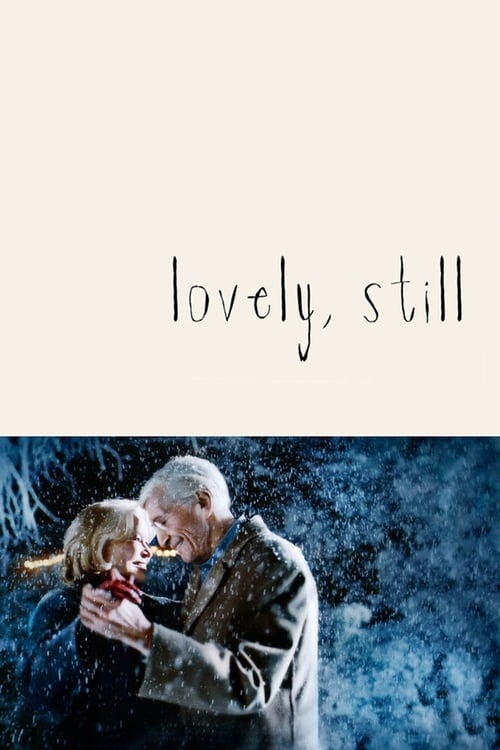
Lovely, Still
Drama · 2009
A holiday fable that tells the story of an elderly man discovering love for the first time.

Purple Hearts
Romance · 2022
An aspiring musician agrees to a marriage of convenience with a soon-to-deploy Marine, but a tragedy soon turns their fake relationship all too real.

Ali and Nino
Drama · 2016
Muslim prince Ali and Georgian aristocrat Nino have grown up in the Russian province of Azerbaijan. Their tragic love story sees the outbreak of the First World War and the world’s struggle for Baku’s oil. Ultimately they must choose to fight for their country’s independence or for each other.

Life in a Year
Drama · 2020
A 17 year old finds out that his girlfriend is dying, so he sets out to give her an entire life, in the last year she has left.

Cyrano
Drama · 2021
A man ahead of his time, Cyrano de Bergerac dazzles whether with ferocious wordplay at a verbal joust or with brilliant swordplay in a duel. But, convinced that his appearance renders him unworthy of the love of a devoted friend, the luminous Roxanne, Cyrano has yet to declare his feelings for her—and Roxanne has fallen in love, at first sight, with Christian.
Cinema release signals and current streaming, rental, and purchase options for your region.
Streaming availability data supplied by JustWatch.
Cast & crew
Directed by
Anatole Litvak
Written by
Samuel A. Taylor

Ingrid Bergman
Paula Tessier

Yves Montand
Roger Demarest

Anthony Perkins
Philip Van der Besh

Jessie Royce Landis
Mrs. Van der Besh

Pierre Dux
Maître Fleury

Jocelyn Lane
First Maisie
Jean Clarke
Second Maisie
Two incompatible taste archetypes. One film. Read the arguments, then issue a completely binding cultural ruling.
“Sincerity is not manipulation.”
The film risks embarrassment to make emotion communal, and that openness is harder than fashionable detachment.
“The strings are showing.”
Every cue tells you exactly what to feel and when, leaving sentiment to do the work character should have done.