The defence The Sentimental Softie
“Sincerity is not manipulation.”
The film risks embarrassment to make emotion communal, and that openness is harder than fashionable detachment.

The Parent Trap
Comedy · Family · Romance · 1961
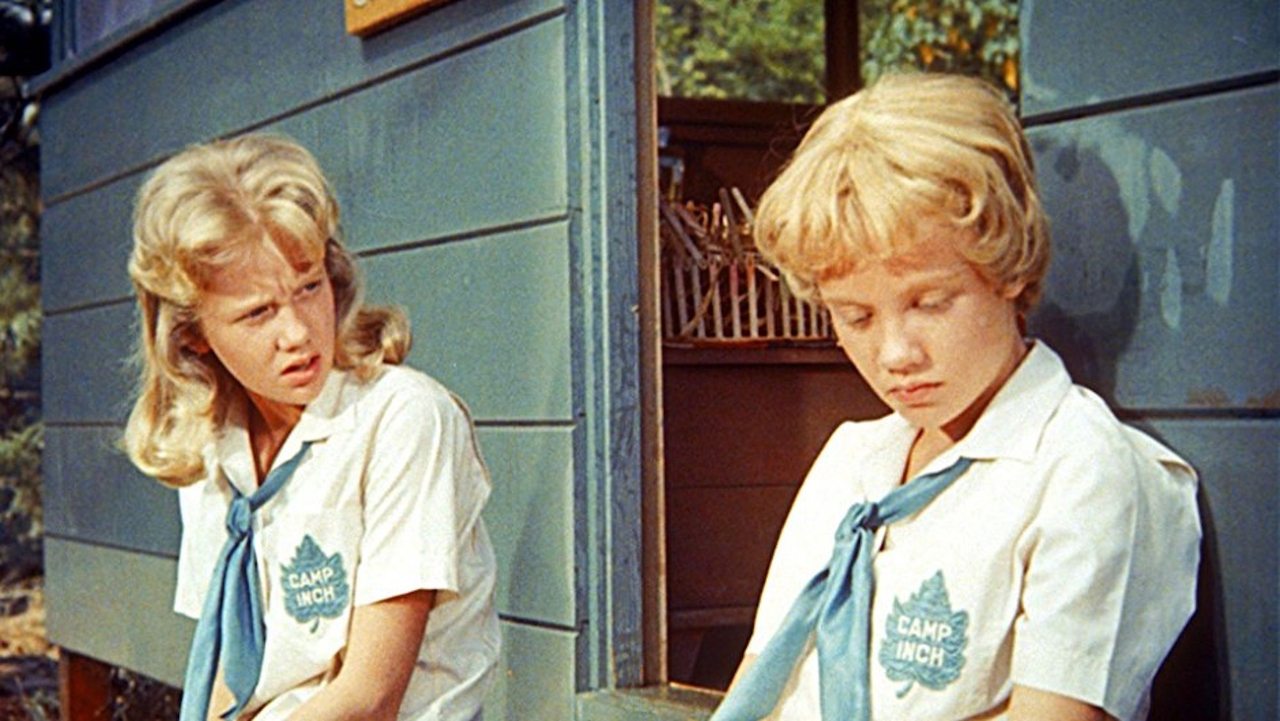
Two identical twin sisters, separated at birth by their parents' divorce, are reunited years later at a summer camp, where they scheme to bring their parents back together. The girls, one of whom has been living with their mother and the other with their father, switch places after camp and go to work on their plan, the first objective being to scare off a gold-digger pursuing their father.
“Caught in a merry marital mix-up!”
Critical arithmetic
Scores change. Arguments endure.
TMDB
7.0 / 10
Community rating
Two identical twin sisters, separated at birth by their parents' divorce, are reunited years later at a summer camp, where they scheme to bring their parents back together. The girls, one of whom has been living with their mother and the other with their father, switch places after camp and go to work on their plan, the first objective being to scare off a gold-digger pursuing their father.
Not a recommendation score. A measure of how closely the film’s taste signals resemble yours.
The archetype split
The Sentimental Softie
“You came to feel something, and you will.”
Read their caseThe Cool Ironist
“Feeling things is a little embarrassing.”
Read their objectionThe split comes from the same five-axis model used by the test, not audience ratings or review sentiment.
TMDB supplies the candidates. CriticWise reorders them by craft, strangeness, prestige, emotion, and pace.

The Parent Trap
Comedy · 1998
Hallie Parker and Annie James are identical twins who were separated at a young age due to their parents' divorce. Unbeknownst to their parents, the girls are sent to the same summer camp, where they meet, discover the truth about their relationship, and come up with a plan to switch places in an effort to reunite their mother and father.

It Takes Two
Comedy · 1995
Identical 9-year-olds from very different backgrounds: orphaned Amanda and wealthy Alyssa meet at summer camp and decide to switch places -- and play matchmaker between Alyssa's dad, Roger, and the kind social worker who cares for Amanda.

Finding Christmas
Family · 2013
Single mother Ryan has just about given up on dating after her divorce, happily accepting her young son as the most important man in her life. That all changes when Ryan's brother Owen, also feeling unlucky in love after a bad breakup, swaps his home in their small North Carolina town with New York City adman Sean.

Falling for Christmas
Romance · 2022
An engaged, spoiled hotel heiress finds herself in the care of a handsome, blue-collar lodge owner and his precocious daughter after getting amnesia in a skiing accident.

Yours, Mine & Ours
Comedy · 2005
Admiral Frank Beardsley returns to New London to run the Coast Guard Academy, his last stop before a probable promotion to head the Guard. A widower with eight children, he runs a loving but tight ship, with charts and salutes. The kids long for a permanent home. Helen North is a free spirit, a designer whose ten children live in loving chaos, with occasional group hugs. Helen and Frank, high school sweethearts, reconnect at a reunion, and it's love at first re-sighting. They marry on the spot. Then the problems start as two sets of kids, the free spirits and the disciplined preppies, must live together. The warring factions agree to work together to end the marriage.

Woody Woodpecker Goes to Camp
Family · 2024
After getting kicked out of the forest, Woody thinks he's found a forever home at Camp Woo Hoo — until an inspector threatens to shut down the camp.

Magic Camp
Family · 2020
Andy, at the urging of his former mentor and Magic Camp owner Roy Preston, returns to the camp of his youth hoping to reignite his career. Instead, he finds inspiration in his ragtag bunch of rookie magicians.

Ramona and Beezus
Comedy · 2010
Ramona is a little girl with a very big imagination and a nose for mischief. Her playful antics keep everyone in her loving family on their toes, including her older sister Beezus, who's just trying to survive her first year of high school. Through all the ups and downs of childhood, Ramona and Beezus learn that anything's possible when you believe in yourself and rely on each other.

Freakier Friday
Comedy · 2025
Years after Tess and Anna endured an identity crisis, Anna now has a daughter of her own and a soon-to-be stepdaughter. As they navigate the myriad challenges that come when two families merge, Tess and Anna discover lightning might indeed strike twice.

When in Rome
Adventure · 2002
Teenage sisters Charli and Leila are on the verge of an experience beyond their wildest dreams! Pack your bags and jet off to Rome as the girls start their summer internship working for the legendary Derek Hanson - the totally cool international tycoon whose empire reaches from airlines to cutting-edge fashion. Amid the fabulous sights of this exciting city, the girls do their best to impress their boss, while still finding time to design their own line of very hip clothing, meet some very cute guys and turn their summer abroad into one awesome adventure they - and you - will never forget!
Cinema release signals and current streaming, rental, and purchase options for your region.
Streaming availability data supplied by JustWatch.
Cast & crew
Directed by
David Swift
Written by
David Swift

Hayley Mills
Susan Evers / Sharon McKendrick

Maureen O'Hara
Margaret 'Maggie' McKendrick

Brian Keith
Mitch Evers

Charles Ruggles
Charles McKendrick

Cathleen Nesbitt
Louise McKendrick

Una Merkel
Verbena

Joanna Barnes
Vicky Robinson
Two incompatible taste archetypes. One film. Read the arguments, then issue a completely binding cultural ruling.
“Sincerity is not manipulation.”
The film risks embarrassment to make emotion communal, and that openness is harder than fashionable detachment.
“The strings are showing.”
Every cue tells you exactly what to feel and when, leaving sentiment to do the work character should have done.