The defence The Sentimental Softie
“Sincerity is not manipulation.”
The film risks embarrassment to make emotion communal, and that openness is harder than fashionable detachment.

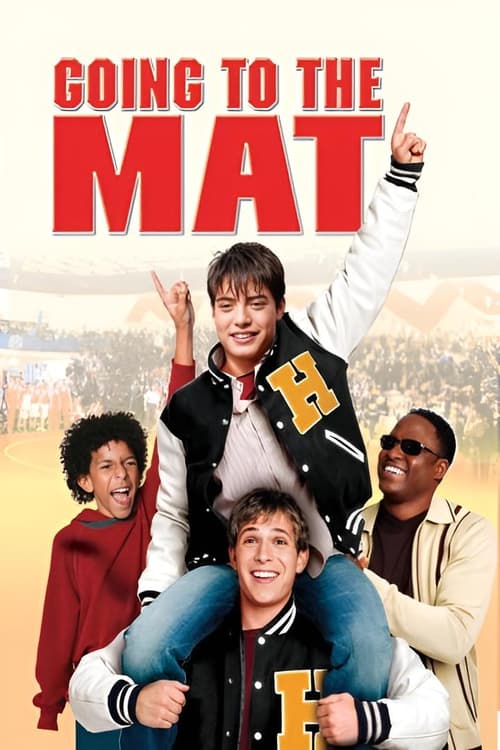
Going to the Mat
TV Movie · Drama · Family · 2004
Jace Newfield has a problem. Besides being blind and being the new kid at school, his problem is that the kids at his new school thinks he's a jerk. Jace has to find a way to be accepted into his new school. Joining the wrestling team just might work.
“There's more to winning than meets the eye.”
Critical arithmetic
Scores change. Arguments endure.
TMDB
6.7 / 10
Community rating
Jace Newfield has a problem. Besides being blind and being the new kid at school, his problem is that the kids at his new school thinks he's a jerk. Jace has to find a way to be accepted into his new school. Joining the wrestling team just might work.
Not a recommendation score. A measure of how closely the film’s taste signals resemble yours.
The archetype split
The Sentimental Softie
“You came to feel something, and you will.”
Read their caseThe Cool Ironist
“Feeling things is a little embarrassing.”
Read their objectionThe split comes from the same five-axis model used by the test, not audience ratings or review sentiment.
TMDB supplies the candidates. CriticWise reorders them by craft, strangeness, prestige, emotion, and pace.

Tru Confessions
TV Movie · 2002
Trudy Walker hated her life. She thought it was totally messed up until she found out about a contest that could change everything...
Horse Sense
Drama · 1999
After treating his rancher cousin shoddily in L.A. Michael Woods is sentenced by his parents to spending a month on the ranch with his cousin and aunt.

Flicka
Family · 2006
Katy McLaughlin desires to work on her family's mountainside horse ranch, although her father insists she finish boarding school. Katy finds a mustang in the hills near her ranch. The headstrong 16 year old then sets her mind to tame a mustang and prove to her father she can run the ranch. But when tragedy happens, it will take all the love and strength the family can muster to restore hope.

A Second Chance: Rivals!
Drama · 2019
As Maddy takes on coaching a team of young twelve-year-old gymnasts, she faces up to intense city versus country rivalry, racism, cyberbullying and her own self-doubt but eventually takes the challenge head on.

An American Girl: Chrissa Stands Strong
Drama · 2009
A fourth grader and her friends deal with bullying from a more popular girl in their class.

Skater Girl
Drama · 2021
Prerna, a teenager growing up in rural India, comes of age when she’s introduced to the sport of skateboarding. As a result, she has to fight the odds to follow her dreams and compete in the national championship.
The Perfect Game
Drama · 2009
Based on a true story, a group of boys from Monterrey, Mexico who become the first non-U.S. team to win the Little League World Series.
Brink!
Drama · 1998
Andy "Brink" Brinker and his in-line skating crew--Peter, Jordy, and Gabriella--who call themselves "Soul-Skaters" (which means they skate for the fun of it, and not for the money), clash with a group of sponsored skaters, Team X-Bladz--led by Val--with whom they attend high school in southern California. When Brink discovers his family is in financial trouble, he goes against the wishes of his parents and his friends and joins Team X-Bladz. Brink tries to lead a double life but will be able to pull it off?

Out of My Mind
Drama · 2024
Melody Brooks, a sixth grader with cerebral palsy, has a quick wit and a sharp mind, but because she is non-verbal and uses a wheelchair, she is not given the same opportunities as her classmates. When a young educator notices her student's untapped potential and Melody starts to participate in mainstream education, Melody shows that what she has to say is more important than how she says it.

I Believe
Family · 2019
A 9 year old boy experiences God's power in a supernatural way.
Cinema release signals and current streaming, rental, and purchase options for your region.
Streaming availability data supplied by JustWatch.
Cast & crew
Directed by
Stuart Gillard
Written by
Chris Nolan · Stu Krieger · Laurie Nolan · Steve Bloom

Andrew Lawrence
Jason 'Jace' Newfield

Khleo Thomas
Vincent "Fly" Shu

Alessandra Torresani
Mary Beth Rice

Billy Aaron Brown
John Lambrix

Brenda Strong
Patty Newfield

Brian Wimmer
Tom Newfield

D. B. Sweeney
Coach Rice
Two incompatible taste archetypes. One film. Read the arguments, then issue a completely binding cultural ruling.
“Sincerity is not manipulation.”
The film risks embarrassment to make emotion communal, and that openness is harder than fashionable detachment.
“The strings are showing.”
Every cue tells you exactly what to feel and when, leaving sentiment to do the work character should have done.